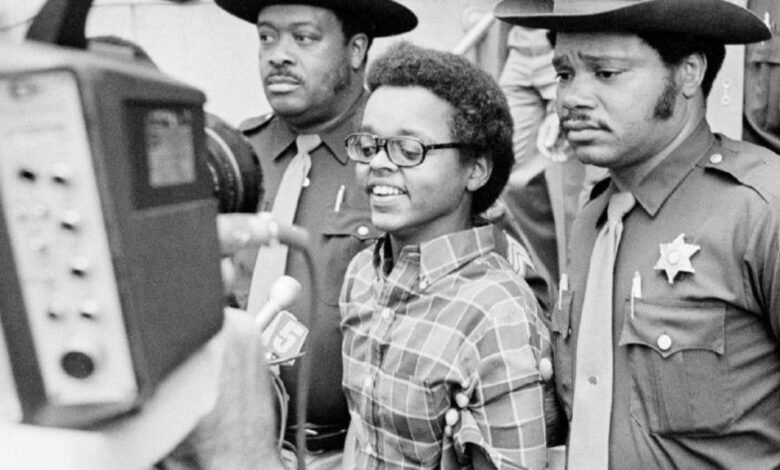
Marcus Wayne Chenault is a name permanently stamped into American criminal history because of a shocking and tragic event that took place in 1974. Though he was a little-known young man from Ohio, his actions carried enormous consequences. He murdered Alberta Williams King, the mother of Dr. Martin Luther King Jr., inside the historic Ebenezer Baptist Church in Atlanta. For decades, researchers, historians, and legal scholars have studied his background, motives, and mental state, trying to understand what drove him to such violence.
This article takes a deep look at everything known about Marcus Wayne Chenault—his early life, ideology, belief system, the events leading to the shooting, the trial, his time in prison, and his eventual death. The goal is to present a detailed, complete, human-readable biography that explains the man, the extremist mindset he adopted, and the lasting impact of his actions.
Early Life of Marcus Wayne Chenault
Marcus Wayne Chenault was born in the early 1950s in Ohio. He grew up in a world far removed from the national spotlight he would one day violently enter. His upbringing was described as ordinary in many ways, but there were early signs of instability in his thinking. As a child and teen, he struggled socially and emotionally. Some who later spoke about him said he had an intensity in his personality and often felt separated or different from his peers.
By the time he reached adulthood, Chenault began developing radical and extremist religious ideas. He was particularly drawn to a fringe interpretation of the Black Hebrew Israelite movement—a belief system that claims African Americans are the true descendants of the ancient Israelites. The movement itself has many different branches, and not all followers are extremist, but Chenault was influenced by one of the more radical sects.
He eventually studied under a man who called himself “The Rev. Ben Israel,” a leader within this extremist group who taught violent, anti-Christian, and anti-minister views. This belief system deeply shaped Chenault’s thinking and gave him a sense of divine mission that was distorted and dangerous.
Developing Extremist Ideology
One of the central aspects of Chenault’s radicalization was his belief that Black Christian ministers were enemies of Black people. He believed they had misled their communities for generations. His sect promoted the idea that Christian teachings were harmful to African Americans, and that those who preached Christianity—especially influential, respected religious figures—needed to be confronted or even eliminated.
According to investigators and psychologists who later reviewed the case, Chenault saw himself as an instrument of divine punishment. He didn’t view his planned acts as personal, but as part of a larger spiritual conflict.
This ideology would eventually push him toward targeting individuals connected to the King family, one of the most respected Christian families in America, and leaders deeply rooted in the Black church.
Planning the Attack on the King Family
Marcus Wayne Chenault traveled to Atlanta, Georgia in June 1974. His original target, according to his own statements, was Martin Luther King Sr., father of Dr. Martin Luther King Jr. and a pastor at Ebenezer Baptist Church. King Sr. was a major figure in the African American Christian community and an outspoken leader.
Chenault believed that killing King Sr. would be a symbolic attack on Christianity within the Black community.
However, on the morning of June 30, 1974, King Sr. was not the one he ultimately shot.
The Murder of Alberta Williams King
On Sunday morning, June 30, 1974, Ebenezer Baptist Church was filled with worshippers attending regular service. Alberta Williams King, the mother of Dr. Martin Luther King Jr., was seated at the church organ, preparing to play music during the service.
Suddenly and without warning, Marcus Wayne Chenault opened fire with a handgun.
He shot Alberta King, killing her instantly. She was 69 years old.
He then shot and killed Edward Boykin, a deacon in the church, and wounded a third person, Mrs. Jimmie Mitchell, who survived despite being shot in the neck.
The attack took place inside a sacred space, in front of a congregation that was horrified and traumatized. Church members tackled Chenault and restrained him until police arrived.
When taken into custody, Chenault reportedly said he was “on a mission from God” and that “all Christians are enemies.” His lack of remorse shocked investigators.
Chenault’s Statements After the Shooting
Following the attack, Chenault was questioned by police and psychiatrists. Throughout all interviews, he maintained that his actions were not personal. He said he targeted people connected to Christianity, not the King family specifically.
His radical beliefs were clear:
- He felt Black ministers were misleading the community.
- He believed Christianity was harmful.
- He claimed he was instructed to act by a higher power.
Though mentally disturbed, he was found competent to stand trial after multiple evaluations.
The Criminal Charges
Just days after the shooting, Chenault was officially charged by a Fulton County grand jury. The charges included:
- Two counts of murder
- One count of aggravated assault
- Carrying a pistol without a license
- Carrying a concealed weapon
Given the high-profile nature of the case and the severity of the crime, prosecutors pursued the death penalty.
The Trial of Marcus Wayne Chenault
His trial began in September 1974. It drew massive media attention because of the connection to the King family and the shocking nature of a murder carried out inside a church sanctuary.
Defense Strategy
The defense attempted to argue insanity, focusing on:
- His radical beliefs
- Statements suggesting delusion
- His intense obsession with religious ideology
However, this strategy did not convince the jury.
Two psychiatrists—even those hired by the defense—testified that Chenault was legally competent. He knew right from wrong. He was mentally disturbed, but not legally insane.
Verdict
The jury convicted Marcus Wayne Chenault on all charges.
Sentence
For the two murders, the jury sentenced him to death.
He also received:
- Ten years for aggravated assault
- Additional one-year sentences for firearms violations
The verdict was seen as straightforward and the evidence overwhelming.
Appeals and Commutation of Sentence
Chenault’s case moved through state and federal appeals courts. The Georgia Supreme Court upheld the conviction and death sentences. However, the story did not end there.
Members of the King family, including Martin Luther King Sr., expressed strong opposition to the death penalty—not just in this case, but in principle. They believed that executing Chenault would not honor the legacy of Dr. Martin Luther King Jr., who preached nonviolence, forgiveness, and justice without retribution.
Out of respect for this position, state officials eventually commuted Chenault’s death sentence to life in prison.
This decision aligned with the King family’s moral stance, even though the crime was deeply painful and personal.
Life in Prison
Chenault spent the next two decades in the Georgia state prison system. He did not become a public figure during his incarceration and was described as quiet, isolated, and often withdrawn.
Those who interacted with him noted that his extremist ideology seemed to weaken over time, but he never fully rejected the beliefs that had motivated the attack.
He remained a controversial figure: some viewed him as mentally ill, some as radically misguided, and others as deliberately violent.
Health Decline and Death
On August 3, 1995, at the age of 44, Chenault suffered a severe stroke. Over the next two weeks, his condition worsened. On August 19, 1995, he died from complications related to the stroke.
He passed away while still serving his life sentence.
The death of Marcus Wayne Chenault closed one of the darkest chapters in the aftermath of the civil rights movement.
Understanding Marcus Wayne Chenault’s Motive
People have long tried to understand what exactly motivated Chenault. His actions seemed senseless, but his own words point to a mixture of:
1. Religious Extremism
He saw himself fighting a spiritual battle against Christianity.
2. Psychological instability
Though legally sane, he displayed signs of delusion and obsession.
3. Influence from radical mentors
His teacher, Rev. Ben Israel, was a major influence on his extremist beliefs.
4. Desire for symbolic impact
By targeting a member of the King family, Chenault chose victims with enormous symbolic meaning.
Impact of the Crime
The murder of Alberta Williams King deeply wounded the King family, who were already grieving Dr. Martin Luther King Jr., assassinated in 1968. The shock of another act of violence targeting their family was devastating.
However, the King family’s commitment to nonviolence and forgiveness shaped how the case progressed. Their opposition to Chenault’s execution stands as one of the strongest examples of moral consistency in modern American history.
The incident also sparked national conversations about:
- Rising religious extremism
- Gun violence inside places of worship
- Mental illness in criminal justice
- The dangers of fringe ideology
Legacy of Marcus Wayne Chenault
Marcus Wayne Chenault is not remembered as a figure of significance by his own achievements, but rather through the tragedy he caused.
His name is linked to:
- The murder of Alberta Williams King
- Religious extremism within certain groups
- A case that tested the limits of sanity defenses
- The King family’s unwavering commitment to opposing the death penalty
While he remains a dark figure, studying his life provides insight into how extremist ideology and psychological instability can intersect with devastating results.
Conclusion
Marcus Wayne Chenault’s story is a disturbing one—a young man shaped by radical beliefs, psychological turmoil, and misguided religious zeal. His attack on the King family remains one of the most shocking acts of violence in 20th-century American religious history.
While his life ended in obscurity behind prison walls, the lessons drawn from his crime continue to be relevant:
- The power of extremist indoctrination
- The moral leadership of the King family
- The ongoing dangers posed by radical ideologies
His actions left a permanent scar, but they also reinforced the importance of nonviolence, forgiveness, and justice rooted in humanity—values the King family continues to embody.