The story of the Western Bantu peoples is one of the most intriguing and essential chapters in African history. It is rooted in ancient migration, deep cultural tradition, rich spirituality, and a powerful legacy that stretches across the western and central regions of sub-Saharan Africa. When we talk about the Western Bantu peoples, we are referring to a diverse group of communities whose ancestors took part in the major Bantu expansion thousands of years ago and eventually settled in areas such as Cameroon, Gabon, Equatorial Guinea, the Republic of the Congo, the western Democratic Republic of the Congo, Angola, and northern Namibia.
Although these groups belong to different ethnicities today, they share linguistic roots, cultural similarities, and historical bonds. The Western Bantu identity is therefore not a single ethnic story but a collective narrative of related peoples, each with their own customs and traditions, yet connected through a common migration pattern and the shared patterns of Bantu languages.
This article dives deep—historically, culturally, linguistically, and socially—into the world of the Western Bantu peoples.
Origins of the Western Bantu Peoples
The journey of the Western Bantu peoples begins thousands of years ago in the region that modern historians identify as the Bantu homeland, likely situated around the borderlands of southeastern Nigeria and western Cameroon. This area is often referred to as the cradle of the Bantu languages, a branch of the vast Niger-Congo language family.
Around 3000 to 1000 BCE, population pressures, agricultural innovations, and mastery of ironworking pushed groups to migrate outward in different directions. One wave moved toward the Great Lakes region of East Africa, while another moved westward and southward into the rainforests and river systems of Central Africa. This western movement became the foundation of the communities known today as the Western Bantu peoples.
As they traveled, they adapted to new environments—dense forests, river basins, savannas, and coastal regions—developing new cultural practices while preserving a linguistic connection to their ancestors.
Geographic Distribution
The Western Bantu peoples today are spread across a large geographical area. This distribution reflects centuries of movement, settlement, interaction, and cultural blending.
Countries where Western Bantu peoples live:
- Cameroon
- Gabon
- Equatorial Guinea
- Republic of the Congo
- Western Democratic Republic of the Congo
- Angola
- Northern Namibia
These regions vary from thick tropical forests in Gabon and the Congo Basin to coastal plains along the Atlantic Ocean and fertile highlands in parts of Cameroon. The environment shaped the livelihoods and traditions of each group, giving rise to diverse yet related cultures.
Major Western Bantu Ethnic Groups
The Western Bantu identity includes dozens of ethnic communities. Although they are distinct in their customs, each belongs to the wider Bantu world.
In Cameroon
- Fang
- Bulu
- Betti
In Gabon
- Fang
- Kota
- Tsogo
- Shira-Punu
- Myene
In Equatorial Guinea
- Fang
- Bubi (partially Bantu)
In the Republic of the Congo
- Kongo
- Teke
- Vili
- Lari
In Western DRC
- Mongo
- Nkundo
- Ndengese
In Angola
- Kongo
- Mbundu
- Ovimbundu (connected historically with western Bantu)
While these are only some examples, they represent some of the most influential and populous Western Bantu groups.
Linguistic Identity
One of the strongest threads unifying Western Bantu peoples is language. They speak Bantu languages, known for their:
- noun class systems
- rich verb morphology
- agglutinative structure
- shared vocabulary roots
Western Bantu languages are grouped under the Northwest and West-Central branches of Bantu.
Some notable languages include:
- Kikongo
- Lingala
- Fang
- Bulu
- Kota
- Vili
- Ambundu dialects
Among these, Lingala stands out as a major lingua franca widely spoken in the Congo Basin, used in music, religion, trade, and everyday communication.
Lingala did not evolve naturally in a single ethnic group but developed from Western Bantu roots along the Congo River as a trade and military language. Today it is spoken by millions across the Democratic Republic of the Congo and the Republic of the Congo.
Cultural Characteristics of Western Bantu Peoples
Despite differences from one community to another, the Western Bantu peoples share several cultural traditions that highlight their common ancestry.
1. Social and Family Structure
Western Bantu societies traditionally organize themselves around:
- extended family networks
- clans and lineage-based identity
- hierarchical but collaborative leadership systems
- respect for elders as custodians of wisdom
In some groups, such as the Kongo, lineage was historically matrilineal, meaning inheritance and clan identity passed through the mother’s line.
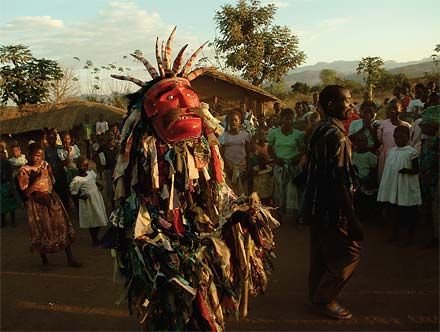
2. Art and Mask-Making
Western Bantu communities are renowned for their artistic traditions. These include:
- wooden carvings
- ceremonial masks
- ancestral statues
- elaborate body ornamentation
- symbolic spiritual designs
The Fang masks are among the most iconic African artworks globally. Their elongated faces and sweeping lines influenced European artists during the early 20th century.
The Kongo cosmogram, a spiritual symbol representing life, death, and rebirth, is a profound element of Western Bantu cultural philosophy.
3. Music and Dance
Music is central to Western Bantu life. Traditional instruments include:
- drums
- xylophones
- harps
- rattles
- thumb pianos (mbira-style instruments)
Many dances are performed during rites of passage, healing ceremonies, weddings, funerals, and agricultural festivals.
4. Food and Agriculture
Western Bantu diets traditionally rely on:
- yams
- cassava
- bananas
- palm oil
- fish
- forest vegetables
- peanuts
Fishing and river-based livelihoods are especially important in the Congo Basin.
Economic Practices
Historically, Western Bantu peoples created economic systems tailored to rainforest and river environments.
Traditional livelihoods included:
- horticulture and small-scale farming
- river fishing and canoe trade
- hunting and gathering
- palm oil and palm wine production
- ironworking in earlier centuries
- craft-making and local trade
In coastal regions, salt production and trade with early merchants played significant roles. In riverine areas, communities created trade networks that stretched for hundreds of miles, long before European contact.
The Western Bantu and the Bantu Expansion
The Bantu Expansion is one of the largest human migrations in ancient history. The Western Bantu peoples represent the western and southwestern branch of this tremendous movement.
Their migration contributed to:
- spreading Bantu languages across Central Africa
- introducing ironworking technology
- establishing communities along major rivers
- forming early kingdoms such as the Kongo Kingdom
Because of their strategic placement along rivers and coastal routes, Western Bantu communities became intermediaries between inland cultures and maritime traders from Europe, the Middle East, and later, the Atlantic world.
The Kongo Kingdom and Other Political Systems
Perhaps the most famous political formation among Western Bantu peoples was the Kongo Kingdom, which emerged around the 14th century and lasted for hundreds of years. The Kongo Kingdom stretched across parts of modern-day Angola, the Democratic Republic of the Congo, and the Republic of the Congo.
This kingdom had a centralized political structure with:
- a king (the Manikongo)
- provincial governors
- a tributary system
- a complex court culture
Western Bantu groups in Cameroon and Gabon, such as the Fang and Kota, tended to organize around clan-based and village-based leadership rather than large centralized states. However, these groups still maintained strong political cohesion through spiritual authority and lineage leadership.
Religion and Spiritual Beliefs
Before the rise of Christianity in Central Africa, Western Bantu peoples practiced traditional religions centered on:
- ancestor reverence
- belief in a supreme creator
- veneration of nature spirits
- divination rituals
- healing ceremonies using plant medicines
Healers and spiritual specialists held respected positions in society. They served as intermediaries between the seen and unseen worlds, guiding communities through illness, conflict, and life transitions.
Today, many Western Bantu peoples are Christian, but elements of traditional spirituality remain deeply embedded in cultural practices, rituals, and artistic expression.
Modern-Day Western Bantu Life
Western Bantu identity is not something frozen in the past—it continues to evolve.
Modern developments include:
- migration to urban centers
- adoption of national languages alongside Bantu languages
- increasing involvement in politics, business, and the arts
- presence in global diaspora communities
- preservation efforts for traditional music, dance, and sculpture
In many regions, Western Bantu peoples remain culturally influential. From Congolese rumba to Fang masks to Kongo spiritual symbols used in contemporary art, their heritage continues to shape the cultural identity of Central Africa.
Challenges Facing Western Bantu Communities Today
Despite their deep history and cultural richness, Western Bantu communities face several modern challenges:
- rapid urbanization affecting traditional societies
- loss of indigenous languages among youth
- deforestation impacting traditional livelihoods
- economic disparities in some regions
- pressure from modernization on ancestral customs
However, the revival of cultural pride and heritage preservation projects has helped keep many traditions alive.
Conclusion
The Western Bantu peoples are a cornerstone of Central African history and identity. Their story stretches across thousands of years—beginning in ancient homelands of West Africa, moving through dense forests and river systems, building societies, kingdoms, and rich cultures, and contributing to the largest linguistic and cultural expansion on the continent.
Today, they remain vibrant, diverse, and influential. From their artistic traditions to their languages, from their social systems to their historical migrations, the Western Bantu peoples embody a powerful legacy of resilience, innovation, and cultural depth.