Harmonicode Sport: A Complete Guide to the Technology Transforming Modern Athletics
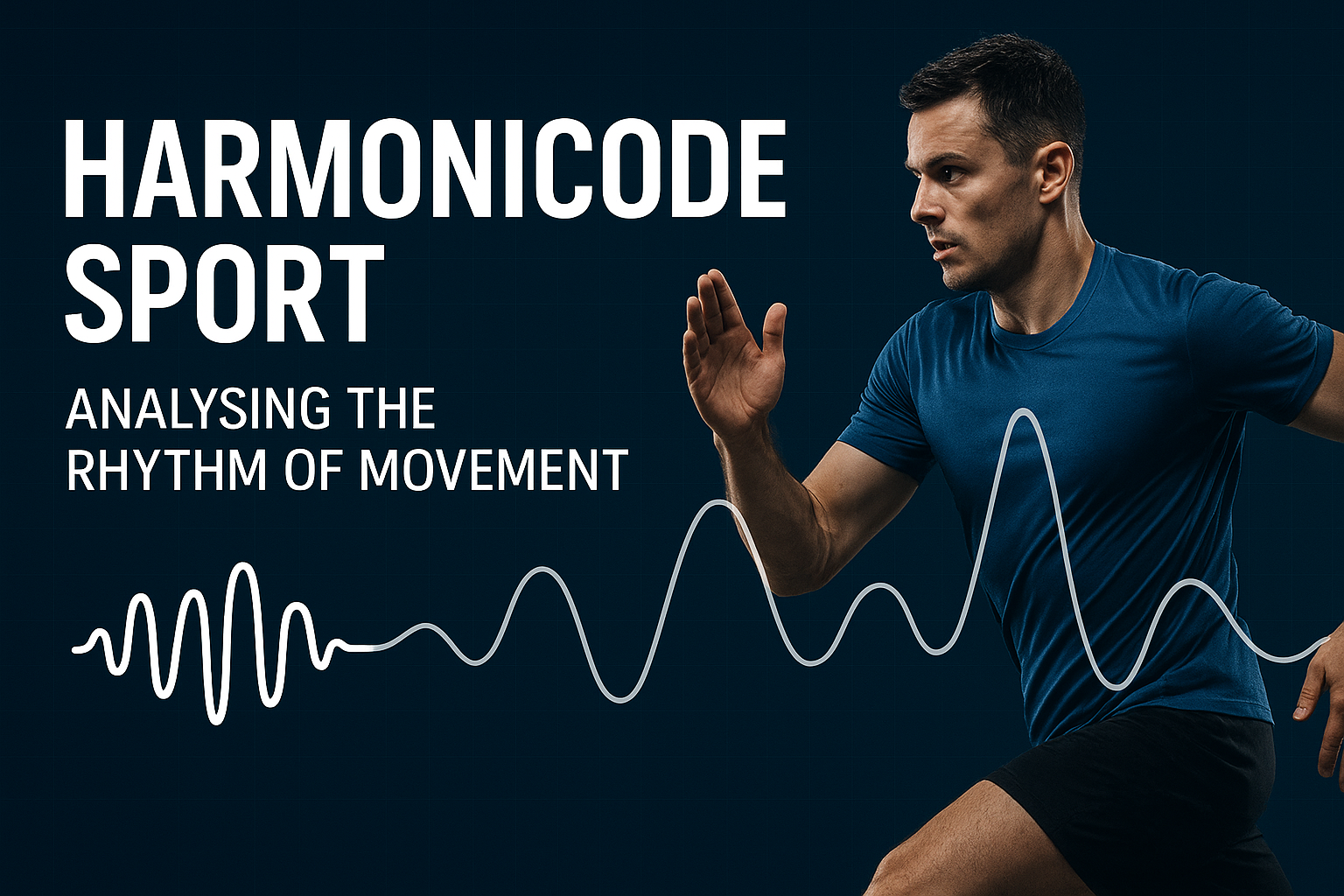
In today’s sports world, athletes are no longer relying only on instinct, raw skill, or the traditional eyes of a coach. High-performance competition demands data, precision, and personalized training—qualities that technology has gradually brought into almost every sport. One of the newest and most talked-about concepts in this space is Harmonicode Sport, a hybrid of biomechanics, rhythm analysis, movement science, and artificial intelligence. While the name sounds technical, the idea behind it is straightforward: study the natural “harmonics” of human motion and use real-time data to refine athletic performance.
Harmonicode Sport is gaining attention because it promises to bridge the gap between how the human body ideally moves and how athletes actually move under stress, fatigue, and real-game conditions. Rather than focusing solely on speed or power, it studies timing, rhythm, frequency, and balance, giving athletes a more complete picture of their efficiency. To understand why this matters, it’s important to start with the core principle: everything in the body moves in patterns.
When you run, your stride has a rhythm. When you swing a racket, your shoulder rotation follows a measurable frequency. When you jump, your takeoff and landing create a cycle. These cycles are known as harmonics, and Harmonicode Sport aims to decode them.
What Is Harmonicode Sport?
Harmonicode Sport is an integrated sports-technology platform that uses sensors, biomechanics, and AI-driven motion analysis to capture an athlete’s movement patterns and break them down into harmonic signatures. Think of it as a system that listens to the “music” of your body—the timing between steps, the oscillation of your joints, the cadence of your breathing and movement—and then analyzes whether those patterns are optimal or inefficient.
The main goal is simple:
identify the most efficient movement pattern for each athlete and help them stay consistent with it.
Instead of only tracking numbers like distance, heart rate, speed, or calories, Harmonicode Sport focuses on how each movement happens. By studying patterns rather than isolated events, it delivers deeper insights into performance, fatigue, coordination, and injury risk.
How Harmonicode Sport Works
To understand how Harmonicode Sport actually produces insights, let’s break down its core components.
1. Motion Sensors and Wearable Devices
Most setups use wearable sensors such as IMUs (Inertial Measurement Units), which track:
- acceleration
- angular velocity
- joint rotation
- limb position
- stride frequency
- micro-vibrations in muscle and bone movement
Sometimes cameras or smart devices supplement these sensors, but the concept remains similar: collect as much precise data as possible from the body in motion.
2. Harmonic and Frequency Analysis
This is where Harmonicode Sport stands out from conventional sports analysis. Instead of looking only at raw numbers, it tries to decode rhythmic patterns in the athlete’s movement. For example:
- Are both legs producing the same stride rhythm?
- Is the athlete using excessive micro-movements that waste energy?
- Is the upper-body rotation in sync with lower-body drive?
- Does the athlete’s harmonic rhythm change as fatigue builds?
These subtle rhythm shifts often reveal issues far earlier than traditional eyeballing or simple data metrics.
3. AI and Machine Learning Models
After the data is collected, machine learning algorithms compare an athlete’s movement patterns to their previous data or to a model of ideal efficiency. The AI identifies:
- asymmetry
- wasted motion
- imbalance
- timing delays
- inefficient loading
- early fatigue signatures
- increased injury risk
This makes the system useful not only for peak performance but also for long-term durability and longevity.
4. Real-Time Feedback
One of the strongest features of Harmonicode Sport is its ability to provide instant feedback. Some platforms offer visual dashboards, while others provide sound cues or haptic signals. The goal is to help athletes adjust their form while still exercising, not afterward.
Real-time correction can drastically improve learning because the body adapts faster when feedback is immediate.
Key Benefits of Harmonicode Sport
Athletes, coaches, physiotherapists, and sports-science teams appreciate the wide range of benefits this system offers.
1. Performance Optimization
Traditional coaching focuses on what the motion looks like. Harmonicode Sport focuses on how it behaves. By analyzing timing and frequency patterns, athletes can achieve:
- smoother mechanics
- improved energy efficiency
- better transfer of force
- more consistent performance under pressure
For example, a runner may discover that their left stride is slightly shorter and out of sync with their right stride. A tennis player might learn their shoulder rotation begins a fraction of a second too late, reducing racket speed. A boxer may find that their punch recovery timing is uneven, exposing them to counters.
Small adjustments like these can create major differences in outcomes.
2. Injury Prevention
Most injuries don’t happen because of one explosive moment—they happen because of repeated, unnoticed imbalances. Harmonicode Sport helps detect:
- asymmetrical loading patterns
- fatigue-induced timing breakdowns
- overuse tendencies
- compensation habits
- joint instability signatures
By identifying these early, athletes can correct their movement before an injury develops. For rehab patients, it helps track progress and ensures they regain full symmetry and balance.
3. Personalized Training Plans
The biggest advantage of this technology is personalization. Instead of using generic programs, Harmonicode Sport tailors adjustments based on each athlete’s unique harmonic profile.
Two athletes with identical physical stats may still have completely different movement rhythms. This system ensures each athlete trains in alignment with how their body naturally functions best.
4. Fatigue and Recovery Monitoring
As athletes tire, their movement harmonics begin to shift. Steps become shorter, joint rotation becomes slower, and timing becomes inconsistent.
Monitoring these subtle shifts helps coaches:
- avoid overtraining
- track readiness
- optimize warm-ups and cooldowns
- manage in-game substitutions
- personalize recovery windows
This leads to better long-term performance and fewer setbacks.
5. Enhanced Coaching Insights
For coaches and sports scientists, Harmonicode Sport provides a new dimension of analytics. It supplements experience and intuition with quantifiable evidence.
Coaches can:
- validate their observations with data
- detect issues that are invisible to the naked eye
- design drills to correct specific harmonic weaknesses
- evaluate progress in a measurable way
It doesn’t replace coaching—it strengthens it.
Applications Across Different Sports
Harmonicode Sport isn’t limited to one type of activity. Its principles apply to nearly every sport where movement plays a critical role.
1. Running and Athletics
Runners rely heavily on rhythm. Harmonicode Sport helps optimize:
- stride cadence
- hip-to-knee motion sequences
- foot impact symmetry
- arm-leg coordination
Even a small improvement in stride harmony can reduce injury risk and improve speed.
2. Football and Rugby
These sports involve explosive sprints, direction changes, and physical collisions. Harmonicode Sport helps track:
- reactive movement patterns
- limb-dominance issues
- cutting and pivoting mechanics
- deceleration timing
Such insights assist both performance and injury prevention, especially for knee and ankle injuries.
3. Tennis, Badminton, and Racket Sports
Timing and precision are everything. Harmonicode Sport reveals:
- shoulder-elbow-wrist synchronization
- footwork rhythm
- torso rotation timing
- recovery cadence between shots
This helps players refine power, accuracy, and defensive readiness.
4. Boxing, MMA, and Combat Sports
Smooth, rhythmic motion is the secret of elite fighters. Harmonicode Sport enhances:
- punching rhythm
- evasive movement timing
- foot-pivot synchronization
- efficiency of combinations
- recovery timing
Because fatigue disrupts rhythm quickly, fighters benefit from real-time feedback during training.
5. Cycling and Rowing
Both sports rely on steady rhythm and consistent mechanical output. Harmonicode Sport can track:
- pedal stroke cycles
- left-right power balance
- hip-torso rhythm
- repetitive strain patterns
This helps athletes maintain efficiency during long endurance events.
Why Harmonicode Sport Matters in Today’s Athletic World
Sports are evolving. Matches are faster. Schedules are busier. Physical demands are higher than ever. Athletes need tools that help them:
- maintain maximum performance
- prevent long-term injury
- adapt training to their own bodies
- track progress scientifically
Harmonicode Sport arrives at the perfect intersection between science, technology, and athlete demand.
Instead of focusing on surface-level metrics, it gives a deep insight into how the body naturally wants to move. Understanding and optimizing these rhythms is becoming just as important as improving strength or speed.
Challenges and Limitations
Even though Harmonicode Sport is promising, it’s important to acknowledge the limitations:
1. Requires Quality Data
If sensors are poorly calibrated or worn incorrectly, results can be inaccurate.
2. Needs Expert Interpretation
While the platform is intelligent, coaches and sport scientists still need to interpret the results in context.
3. Not Yet Mainstream Everywhere
As a relatively new technology, it’s still gaining adoption across global sports programs.
4. Cost and Accessibility
Depending on the setup, the hardware and software can be expensive for smaller clubs or youth academies.
Despite these challenges, adoption is growing each year as more teams seek deeper insights and competitive advantages.
The Future of Harmonicode Sport
The next stage for technologies like Harmonicode Sport will likely include:
- more lightweight sensors
- deeper AI models that predict injuries before symptoms appear
- integration with VR/AR for immersive training
- enhanced real-time coaching tools
- cloud-based athlete-performance dashboards
As the tech matures, it may become a standard part of training programs the same way heart-rate monitors and GPS trackers became mainstream a decade ago.
Conclusion
Harmonicode Sport represents a new era of athlete development—one where rhythm, timing, and harmonic analysis become as important as strength, endurance, or skill. By decoding the natural patterns within human movement, it gives athletes and coaches a powerful advantage: the ability to understand the body at a deeper level and optimize performance with scientific precision.
Whether you’re an elite athlete, a coach, a physiotherapist, or simply someone passionate about sports science, Harmonicode Sport offers a fresh perspective on how the body truly moves and how it can move even better. It’s not just another data tool—it’s a window into the hidden patterns that define athletic greatness.