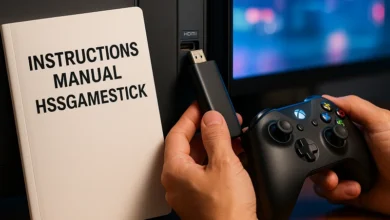
Resolution Settings HSSGameStick: Complete Guide for Best Display and Performance
If you own an HSSGameStick, one of the most critical settings to understand is the resolution settings. These settings are not just numbers—they directly influence how your games look, how smooth the gameplay feels, and how compatible the device is with your TV. Getting the right resolution and display settings ensures a seamless gaming experience while preserving the retro aesthetic of the classic games you love. This guide dives deep into everything you need to know about resolution settings HSSGameStick, how to adjust them, and how to get the best out of your console.
Understanding HSSGameStick and Its Display Options
The HSSGameStick is a compact, plug-and-play gaming device designed for emulation of classic consoles like NES, SNES, Sega Genesis, PlayStation, and more. It connects directly to your TV through HDMI, meaning the video resolution is crucial for proper display.
Resolution determines the number of pixels displayed on your screen. A higher resolution provides sharper visuals but requires more processing power, while a lower resolution might reduce performance strain but can make images look less detailed. With the HSSGameStick, choosing the right resolution affects:
- Game clarity: Pixel art and retro graphics display better at appropriate resolutions.
- Performance: Higher resolutions can sometimes lead to frame drops or input lag.
- TV compatibility: Selecting unsupported resolutions can result in a blank screen or distorted image.
- Aspect ratio: Proper ratios prevent stretching or cropping of game visuals.
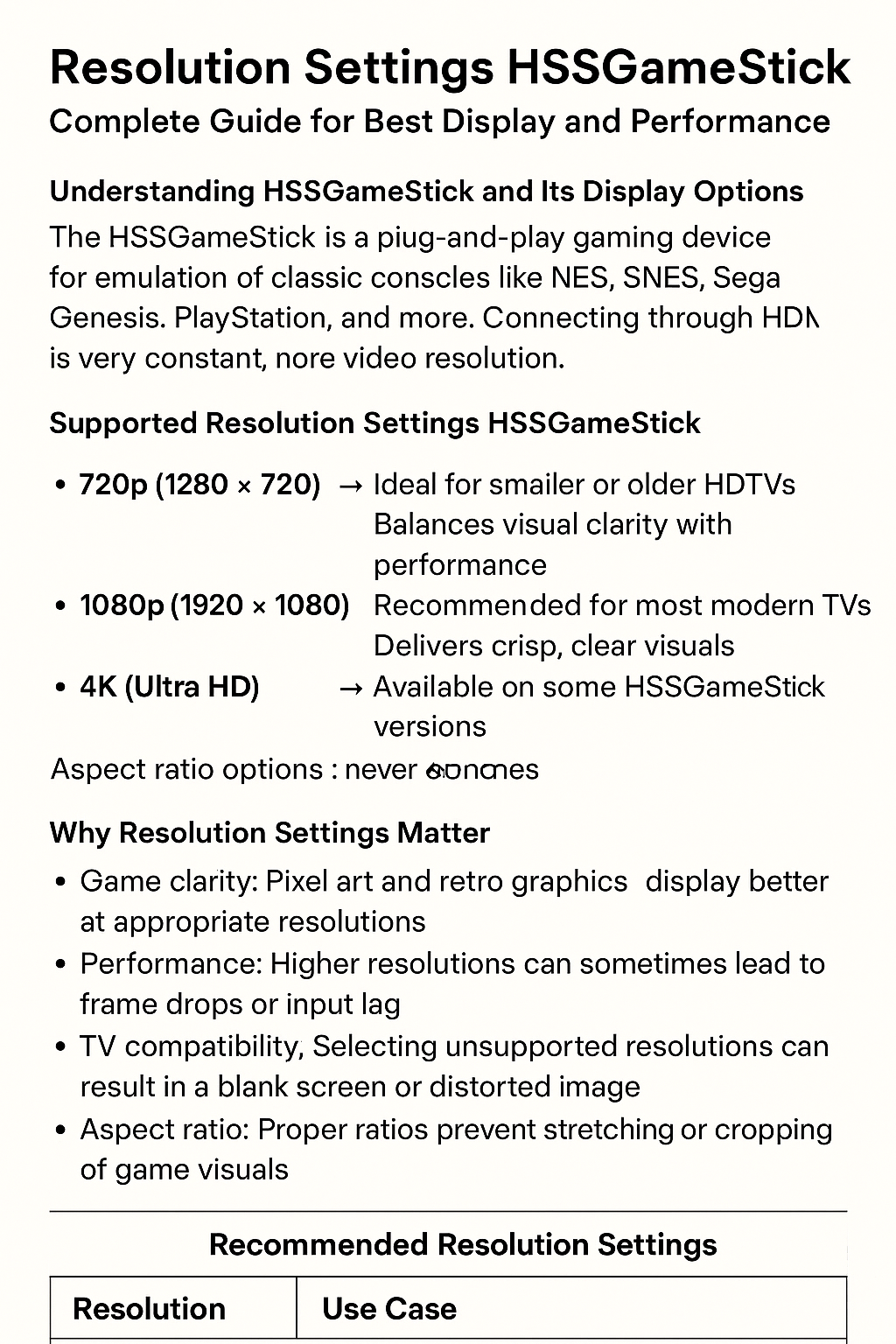
Supported Resolution Settings HSSGameStick
The HSSGameStick provides a few key resolution options to ensure compatibility with both modern and older TVs:
- 720p (1280 × 720)
- Ideal for smaller or older HDTVs.
- Balances visual clarity with performance, ensuring smoother gameplay on retro and emulator-heavy games.
- Produces a slightly softer image, which can replicate the authentic feel of older consoles.
- 1080p (1920 × 1080)
- Recommended for most modern TVs.
- Delivers crisp, clear visuals without overloading the system.
- Provides a good middle ground for performance and sharpness.
- 4K (Ultra HD)
- Available on some HSSGameStick versions.
- Delivers extremely sharp visuals on compatible TVs.
- May introduce performance issues on demanding emulators or affect input response.
In addition to resolution, the HSSGameStick allows you to choose aspect ratios, typically between 4:3 for classic games and 16:9 for widescreen displays. Selecting the correct aspect ratio is essential to maintain the intended proportions of retro games.
Why Resolution Settings Matter
Many new users overlook resolution settings, assuming “higher is better.” However, the optimal resolution depends on several factors:
- TV size and quality: A smaller or older TV might not handle 1080p or 4K well, causing flicker or black screens.
- Game type: Retro games often look better at lower resolutions that mimic their original display format.
- Performance vs visuals: Higher resolutions require more processing power and could introduce lag, especially with complex emulators or graphics filters.
- Personal preference: Some gamers prefer a softer 720p look for authenticity, while others want the sharpest possible graphics.
Getting the resolution right ensures smooth gameplay, proper image scaling, and reduced strain on both your console and TV.
How to Access and Change Resolution Settings HSSGameStick
Adjusting the resolution settings HSSGameStick is straightforward. Follow these steps:
- Power On and Connect
- Connect the HSSGameStick to your TV’s HDMI port and turn on both devices.
- Enter Settings Menu
- Use the controller to navigate to the main menu.
- Look for Settings, often represented by a gear icon.
- Locate Display/Video Settings
- Within the settings menu, find options labeled Display, Video, or Screen Settings.
- Select Resolution
- Choose between 720p, 1080p, or 4K, depending on your TV and performance needs.
- Apply or save the changes.
- Adjust Aspect Ratio
- Choose between 4:3 and 16:9 depending on the games you play and the TV’s shape.
- Fine-tune screen position or overscan to ensure the entire game fits the screen without stretching or cropping.
- Test Your Settings
- Launch a few games to verify that the visuals are correct and gameplay is smooth.
- Make additional adjustments if necessary, especially for retro games or complex emulators.
- Reset if Needed
- If the screen goes blank or resolution changes fail, use the default or auto mode to revert.
- In some cases, removing any external storage (microSD) or performing a factory reset may help restore the display.
Best Practices for Resolution Settings HSSGameStick
To get the best gaming experience, consider these tips:
- Know your TV capabilities: Match the console resolution with your TV’s maximum supported resolution.
- Optimize for retro games: Use 720p or 4:3 aspect ratio for NES, SNES, or similar consoles.
- Balance performance and visuals: High resolution looks great but can cause lag on demanding games.
- Use proper HDMI cables: A poor-quality cable may limit resolution output or cause signal issues.
- Save your preferred settings: Once you find an optimal resolution and aspect ratio, save them for consistent performance.
- Check for firmware updates: New firmware may add resolution options or improve stability, so keep your HSSGameStick updated.
Common Problems and How to Fix Them
Even with careful setup, users sometimes encounter problems with resolution settings HSSGameStick:
- Blank or No Signal Screen
- Occurs when your TV cannot handle the selected resolution.
- Solution: Reboot in default mode or choose a lower resolution like 720p.
- Black Bars or Cropped Image
- Often caused by incorrect aspect ratio or overscan issues.
- Solution: Adjust aspect ratio and screen position settings.
- Stretched or Squashed Graphics
- Happens when widescreen is forced on a 4:3 game.
- Solution: Switch to 4:3 to preserve the original look.
- Lag or Performance Issues
- High resolutions or advanced filters can slow down gameplay.
- Solution: Lower the resolution or disable heavy filters.
- Audio Out of Sync
- May occur after changing resolution settings.
- Solution: Adjust audio delay settings if available or revert to a stable resolution.
Why Optimizing Resolution Settings HSSGameStick Improves Gameplay
Proper resolution and display settings aren’t just cosmetic—they can significantly impact your gaming experience:
- Sharper graphics: Proper resolution ensures pixel-perfect clarity for retro and modern games.
- Smooth gameplay: Lower resolutions can reduce lag, improving responsiveness.
- TV compatibility: Correct settings prevent flicker, blank screens, or distorted images.
- Authentic retro feel: Choosing the right aspect ratio preserves the original appearance of classic games.
- Customizability: You can adjust resolution and display settings to match your preferences for both visuals and performance.
Advanced Tips for Power Users
For those who want to get the most out of their HSSGameStick:
- Experiment with 720p for performance-intensive games: Some emulators or games may benefit from reduced resolution for smoother gameplay.
- Use 1080p on HD TVs: Ideal for modern displays, providing crisp visuals without performance loss.
- Try 4K selectively: Only for compatible TVs and lighter games; be mindful of input lag.
- Combine with shaders and filters wisely: Retro shaders or CRT filters enhance visuals but can strain the system at high resolutions.
- Backup preferred settings: Keep a note or screenshot of your optimized resolution and aspect ratio for quick restoration if needed.
Conclusion
Understanding and configuring resolution settings HSSGameStick is essential for any gamer who wants the best possible experience. The right resolution ensures sharp visuals, smooth gameplay, and TV compatibility while preserving the classic look of your retro games.
By following this guide, you can confidently set up your HSSGameStick, choose the right resolution and aspect ratio, troubleshoot common issues, and fine-tune your settings to match your preferences. Whether you’re aiming for authenticity in retro gaming or maximum clarity on a modern TV, the right resolution settings make all the difference.
Take the time to explore these options, test different resolutions, and adjust your settings. Doing so will transform your HSSGameStick experience, making every game look and feel just right.